

Common FSSC 22000 Audit Findings in Malaysian Food Factories

Common FSSC 22000 Audit Findings in Malaysian Food Factories
Why FSSC 22000 Certification Malaysia Matters More Than Ever
Malaysia’s food and beverage sector is increasingly plugged into global supply chains. Multinational buyers, retail chains, and export markets now treat FSSC 22000 Malaysia certification as a baseline requirement, not a bonus. Recognised by the Global Food Safety Initiative (GFSI), FSSC 22000 Malaysia gives buyers confidence that a factory’s food safety management system is robust, auditable, and consistently applied. For FSSC 22000 consulting support in Johor, many factories start by reviewing exactly where their current system is likely to fail.
The challenge is that many Malaysian food factories have already built the paperwork for FSSC 22000 Certification Malaysia. Policies exist, procedures are written, and records are filed, yet the same non-conformities (NCs) keep surfacing at Stage 1 and Stage 2 audits. The system looks complete on paper but breaks down on the floor.
Key Takeaways
- Most FSSC 22000 Malaysia non-conformities come from a gap between documented procedures and daily execution, not from missing documents.
- Allergen management, traceability, and Food Defence/Food Fraud programmes are the areas most frequently flagged in FSSC 22000 Malaysia audits.
- A stronger internal audit system and genuine food safety culture reduce NCs more effectively than last-minute document polishing.
- Successful FSSC 22000 Malaysia certification projects focus on daily compliance rather than audit-day preparation.
This article walks through the FSSC 22000 Malaysia audit findings that show up again and again in Johor and across the country, explains why they happen, and outlines a practical way to close the gaps before your next audit. For background on how the standard itself has evolved, see our earlier guide on FSSC 22000 audit preparation in Johor.
7 Common FSSC 22000 Audit Pain Points in Malaysian Food Factories
Auditors preparing an FSSC 22000 Malaysia certification decision tend to probe the same set of weak spots. Here are the seven areas that generate the most findings.
1. Documentation That Doesn’t Match Reality
SOPs are often well written, but the shop floor doesn’t always follow them exactly. The most common gaps are cleaning records signed after the fact instead of at the time of cleaning, monitoring records completed in batches rather than in real time, and corrective actions recorded without evidence that the root cause was actually addressed.
Auditors are trained to cross-check documents against what they observe on the line. A beautifully written SOP does not protect a factory if the practice on the floor tells a different story.
2. Weak Execution of Prerequisite Programmes (PRPs)
PRPs are the foundation of any FSMS, and they are also where auditors find the most “basic” deductions. Typical findings include pest control stations that were not inspected or logged on schedule, facility maintenance issues such as peeling paint, damaged drains, or gaps in walls that were left unresolved, and personal hygiene practices, from handwashing to glove use to jewellery policy, that are inconsistently enforced.
These findings are rarely about lack of knowledge. They are about consistency across shifts, especially night shifts and contract workers.
3. Traceability and Recall Simulation Failures
Auditors commonly run a mock recall during the audit and expect a complete, timely response. The most frequent issues are batches that cannot be traced fully within the target time (often set at 2 to 4 hours), broken links between raw material batches, work-in-progress, and finished goods, and incomplete mass balance calculations during the mock recall exercise.
4. Blind Spots in Additional FSSC Requirements
Food Defence and Food Fraud prevention plans are part of the FSSC 22000 Malaysia scheme (see how the scheme has changed in our FSSC 22000 V7 transition guide), but they are often the least mature part of the system. Common problems include a Vulnerability Assessment (VACCP) that isn’t properly documented, a Threat Assessment (TACCP) treated as a paperwork exercise rather than a real risk review, and no clear link between the assessment and the actual mitigation measures in place. FSSC‘s own guidance describes these as core additional requirements of the scheme, not optional extras.
5. Change Management Gaps
When a factory installs new equipment, changes a supplier, or modifies a process, the corresponding risk assessment is often missed or done retrospectively, after the change has already gone live rather than before it.
6. Allergen Cross-Contact in a Multi-Ethnic Manufacturing Environment
Malaysia’s diverse food manufacturing landscape, where facilities may produce products spanning multiple cuisines and dietary requirements, makes allergen cross-contact a particularly sensitive area. Auditors look closely at physical or time-based segregation of allergen-containing lines, cleaning validation between allergen and non-allergen production runs, and the accuracy of allergen declarations on labels versus the actual formulation.
7. Internal Audits and Supplier Verification That Miss Real Problems
A surprising number of NCs exist precisely because the internal audit system, and the supplier verification process feeding into it, failed to catch them first. Common root causes include internal auditors who lack the competency or independence to challenge their own department, internal audits that become a checklist exercise rather than a genuine system review, findings that are not tracked through to verified closure, and Certificates of Analysis (COAs) that go missing, expire, or are never cross-checked against incoming material specs because suppliers are approved once and rarely re-evaluated.
Common Mistakes vs. Correct Practice
| Area | Common Mistake | Correct Practice |
|---|---|---|
| Cleaning records | Signed off after the shift, from memory | Signed at the time of cleaning, verified by a supervisor |
| Pest control | Bait stations checked “when there’s time” | Fixed inspection schedule, logged and trended monthly |
| Allergen control | Shared equipment cleaned without validation | Documented cleaning validation between allergen changeovers |
| Traceability | Batch records scattered across paper and system | Single, complete batch record from raw material to shipment |
| Food Fraud/Defence | Risk assessment done once, filed away | Risk assessment reviewed annually or after any major change |
| Internal audits | Checklist-based, same auditor every time | Competency-based, rotated auditors, root-cause driven |
| Change management | Risk assessed after implementation | Risk assessed and approved before implementation |
Why These Findings Keep Reappearing
Most FSSC 22000 Malaysia findings are not caused by a lack of technical knowledge. They usually come from staff turnover, insufficient supervision, poor communication between departments, weak management follow-up, and internal verification that isn’t thorough enough to catch problems before the certification body does.
Many organisations pursuing FSSC 22000 Certification Malaysia focus heavily on preparing documents right before the audit. Auditors, however, are increasingly interested in how effectively the system functions on a daily basis, not just how it looks on paper the week of the visit.
Closing the Gaps: How to Improve Your Audit Outcomes
Shift from “Passing the Audit” to Risk-Based Management
Factories that treat FSSC 22000 Malaysia certification as an annual event tend to see the same findings every cycle. Factories that treat it as an ongoing risk management discipline see NCs decline year over year.
Build a Genuine Food Safety Culture
Food safety culture is not a slogan on a poster. It is whether a line operator feels comfortable stopping production when something looks wrong. This requires visible commitment from management and consistent reinforcement, not a once-a-year training session. FSSC‘s scheme documentation increasingly frames culture, leadership commitment, and employee engagement as core expectations rather than optional add-ons.
Consider Digital Records
Malaysia’s food safety oversight is tightening, and paper-based systems make it harder to catch gaps before an FSSC 22000 Malaysia auditor does. Digitising monitoring records, sanitation logs, and CCP checks reduces transcription errors and makes real-time verification possible. This is not mandatory for certification, but it is a practical response to the local regulatory direction as well as an audit-readiness measure.
Strengthen the Internal Audit and Management Review Cycle
Internal audits should be resourced and taken seriously, with competent auditors who are independent of the area they are reviewing. Management review should go beyond reporting numbers; it should drive decisions on resourcing, training, and system changes.
Is Your Factory Ready for the Next FSSC 22000 Audit?
Your facility may benefit from a readiness assessment if any of the following apply:
- Mock recalls cannot be completed within the required timeframe
- Internal audits repeatedly identify the same findings
- Supplier verification records are incomplete
- Food Fraud or Food Defence assessments have not been reviewed recently
- Allergen validation activities are missing
- You are preparing for Stage 1 or Stage 2 certification
Many organisations only discover these weaknesses during an external FSSC 22000 Malaysia audit. Identifying them beforehand is usually faster, less disruptive, and considerably less expensive.
Conclusion
For Malaysian food manufacturers, FSSC 22000 Malaysia certification is more than a trade requirement. It is a form of protection for brand reputation, buyer relationships, and long-term market access. The findings covered in this article are not exotic technical failures; they are the predictable result of documentation and daily practice drifting apart over time.
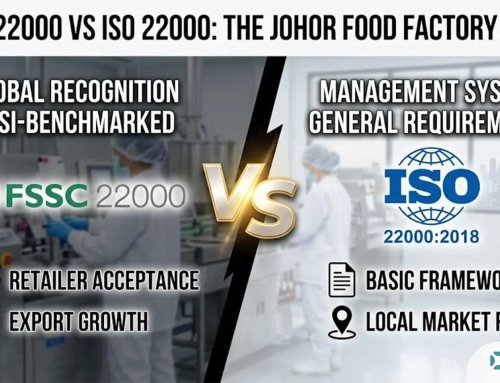
Closing these gaps doesn’t require reinventing your FSMS. It requires disciplined execution, an internal audit system that actually finds problems before the external auditor does, and a shift toward treating FSSC 22000 Malaysia compliance as everyday management rather than a once-a-year scramble. If you’re weighing certification options, our comparison of FSSC 22000 vs ISO 22000 may also help clarify the right path for your factory.
If your factory is preparing for an upcoming FSSC 22000 Malaysia audit or wants an independent review of where your system currently stands, Clarity’s team can support your internal audit and readiness assessment based on current FSSC 22000 requirements.


Common FSSC 22000 Audit Findings in Malaysian Food Factories
Common FSSC 22000 Audit Findings in Malaysian Food Factories
Why FSSC 22000 Certification Malaysia Matters More Than Ever
Malaysia’s food and beverage sector is increasingly plugged into global supply chains. Multinational buyers, retail chains, and export markets now treat FSSC 22000 Malaysia certification as a baseline requirement, not a bonus. Recognised by the Global Food Safety Initiative (GFSI), FSSC 22000 Malaysia gives buyers confidence that a factory’s food safety management system is robust, auditable, and consistently applied. For FSSC 22000 consulting support in Johor, many factories start by reviewing exactly where their current system is likely to fail.
The challenge is that many Malaysian food factories have already built the paperwork for FSSC 22000 Certification Malaysia. Policies exist, procedures are written, and records are filed, yet the same non-conformities (NCs) keep surfacing at Stage 1 and Stage 2 audits. The system looks complete on paper but breaks down on the floor.
Key Takeaways
- Most FSSC 22000 Malaysia non-conformities come from a gap between documented procedures and daily execution, not from missing documents.
- Allergen management, traceability, and Food Defence/Food Fraud programmes are the areas most frequently flagged in FSSC 22000 Malaysia audits.
- A stronger internal audit system and genuine food safety culture reduce NCs more effectively than last-minute document polishing.
- Successful FSSC 22000 Malaysia certification projects focus on daily compliance rather than audit-day preparation.
This article walks through the FSSC 22000 Malaysia audit findings that show up again and again in Johor and across the country, explains why they happen, and outlines a practical way to close the gaps before your next audit. For background on how the standard itself has evolved, see our earlier guide on FSSC 22000 audit preparation in Johor.
7 Common FSSC 22000 Audit Pain Points in Malaysian Food Factories
Auditors preparing an FSSC 22000 Malaysia certification decision tend to probe the same set of weak spots. Here are the seven areas that generate the most findings.
1. Documentation That Doesn’t Match Reality
SOPs are often well written, but the shop floor doesn’t always follow them exactly. The most common gaps are cleaning records signed after the fact instead of at the time of cleaning, monitoring records completed in batches rather than in real time, and corrective actions recorded without evidence that the root cause was actually addressed.
Auditors are trained to cross-check documents against what they observe on the line. A beautifully written SOP does not protect a factory if the practice on the floor tells a different story.
2. Weak Execution of Prerequisite Programmes (PRPs)
PRPs are the foundation of any FSMS, and they are also where auditors find the most “basic” deductions. Typical findings include pest control stations that were not inspected or logged on schedule, facility maintenance issues such as peeling paint, damaged drains, or gaps in walls that were left unresolved, and personal hygiene practices, from handwashing to glove use to jewellery policy, that are inconsistently enforced.
These findings are rarely about lack of knowledge. They are about consistency across shifts, especially night shifts and contract workers.
3. Traceability and Recall Simulation Failures
Auditors commonly run a mock recall during the audit and expect a complete, timely response. The most frequent issues are batches that cannot be traced fully within the target time (often set at 2 to 4 hours), broken links between raw material batches, work-in-progress, and finished goods, and incomplete mass balance calculations during the mock recall exercise.
4. Blind Spots in Additional FSSC Requirements
Food Defence and Food Fraud prevention plans are part of the FSSC 22000 Malaysia scheme (see how the scheme has changed in our FSSC 22000 V7 transition guide), but they are often the least mature part of the system. Common problems include a Vulnerability Assessment (VACCP) that isn’t properly documented, a Threat Assessment (TACCP) treated as a paperwork exercise rather than a real risk review, and no clear link between the assessment and the actual mitigation measures in place. FSSC‘s own guidance describes these as core additional requirements of the scheme, not optional extras.
5. Change Management Gaps
When a factory installs new equipment, changes a supplier, or modifies a process, the corresponding risk assessment is often missed or done retrospectively, after the change has already gone live rather than before it.
6. Allergen Cross-Contact in a Multi-Ethnic Manufacturing Environment
Malaysia’s diverse food manufacturing landscape, where facilities may produce products spanning multiple cuisines and dietary requirements, makes allergen cross-contact a particularly sensitive area. Auditors look closely at physical or time-based segregation of allergen-containing lines, cleaning validation between allergen and non-allergen production runs, and the accuracy of allergen declarations on labels versus the actual formulation.
7. Internal Audits and Supplier Verification That Miss Real Problems
A surprising number of NCs exist precisely because the internal audit system, and the supplier verification process feeding into it, failed to catch them first. Common root causes include internal auditors who lack the competency or independence to challenge their own department, internal audits that become a checklist exercise rather than a genuine system review, findings that are not tracked through to verified closure, and Certificates of Analysis (COAs) that go missing, expire, or are never cross-checked against incoming material specs because suppliers are approved once and rarely re-evaluated.
Common Mistakes vs. Correct Practice
| Area | Common Mistake | Correct Practice |
|---|---|---|
| Cleaning records | Signed off after the shift, from memory | Signed at the time of cleaning, verified by a supervisor |
| Pest control | Bait stations checked “when there’s time” | Fixed inspection schedule, logged and trended monthly |
| Allergen control | Shared equipment cleaned without validation | Documented cleaning validation between allergen changeovers |
| Traceability | Batch records scattered across paper and system | Single, complete batch record from raw material to shipment |
| Food Fraud/Defence | Risk assessment done once, filed away | Risk assessment reviewed annually or after any major change |
| Internal audits | Checklist-based, same auditor every time | Competency-based, rotated auditors, root-cause driven |
| Change management | Risk assessed after implementation | Risk assessed and approved before implementation |
Why These Findings Keep Reappearing
Most FSSC 22000 Malaysia findings are not caused by a lack of technical knowledge. They usually come from staff turnover, insufficient supervision, poor communication between departments, weak management follow-up, and internal verification that isn’t thorough enough to catch problems before the certification body does.
Many organisations pursuing FSSC 22000 Certification Malaysia focus heavily on preparing documents right before the audit. Auditors, however, are increasingly interested in how effectively the system functions on a daily basis, not just how it looks on paper the week of the visit.
Closing the Gaps: How to Improve Your Audit Outcomes
Shift from “Passing the Audit” to Risk-Based Management
Factories that treat FSSC 22000 Malaysia certification as an annual event tend to see the same findings every cycle. Factories that treat it as an ongoing risk management discipline see NCs decline year over year.
Build a Genuine Food Safety Culture
Food safety culture is not a slogan on a poster. It is whether a line operator feels comfortable stopping production when something looks wrong. This requires visible commitment from management and consistent reinforcement, not a once-a-year training session. FSSC‘s scheme documentation increasingly frames culture, leadership commitment, and employee engagement as core expectations rather than optional add-ons.
Consider Digital Records
Malaysia’s food safety oversight is tightening, and paper-based systems make it harder to catch gaps before an FSSC 22000 Malaysia auditor does. Digitising monitoring records, sanitation logs, and CCP checks reduces transcription errors and makes real-time verification possible. This is not mandatory for certification, but it is a practical response to the local regulatory direction as well as an audit-readiness measure.
Strengthen the Internal Audit and Management Review Cycle
Internal audits should be resourced and taken seriously, with competent auditors who are independent of the area they are reviewing. Management review should go beyond reporting numbers; it should drive decisions on resourcing, training, and system changes.
Is Your Factory Ready for the Next FSSC 22000 Audit?
Your facility may benefit from a readiness assessment if any of the following apply:
- Mock recalls cannot be completed within the required timeframe
- Internal audits repeatedly identify the same findings
- Supplier verification records are incomplete
- Food Fraud or Food Defence assessments have not been reviewed recently
- Allergen validation activities are missing
- You are preparing for Stage 1 or Stage 2 certification
Many organisations only discover these weaknesses during an external FSSC 22000 Malaysia audit. Identifying them beforehand is usually faster, less disruptive, and considerably less expensive.
Conclusion
For Malaysian food manufacturers, FSSC 22000 Malaysia certification is more than a trade requirement. It is a form of protection for brand reputation, buyer relationships, and long-term market access. The findings covered in this article are not exotic technical failures; they are the predictable result of documentation and daily practice drifting apart over time.
Closing these gaps doesn’t require reinventing your FSMS. It requires disciplined execution, an internal audit system that actually finds problems before the external auditor does, and a shift toward treating FSSC 22000 Malaysia compliance as everyday management rather than a once-a-year scramble. If you’re weighing certification options, our comparison of FSSC 22000 vs ISO 22000 may also help clarify the right path for your factory.
If your factory is preparing for an upcoming FSSC 22000 Malaysia audit or wants an independent review of where your system currently stands, Clarity’s team can support your internal audit and readiness assessment based on current FSSC 22000 requirements.
