

ESG Consulting Services Malaysia: ESG Readiness Assessment for Manufacturers

ESG Consulting Services Malaysia: ESG Readiness Assessment for Manufacturers
1. Do Malaysian Manufacturers Need an ESG Readiness Assessment Before ESG Reporting?
Quick answer: Engaging an ESG consultant Malaysia manufacturers trust is the most reliable way to run a proper ESG readiness assessment — the structured first step that should take place before formal ESG reporting begins.
This sequence matters because a readiness assessment allows a company to:
- Identify internal ESG gaps before they become reporting problems
- Assess whether existing data is accurate, complete, and accessible
- Align governance responsibilities across departments
- Avoid costly delays once reporting deadlines are in motion
Before engaging external ESG consulting services, companies should first understand how prepared they actually are for ESG reporting. Without this groundwork, even well-intentioned reporting efforts tend to stall.
2. Why Many Companies Get ESG Reporting Wrong
A common mistake among Malaysian manufacturers is treating ESG reporting as the starting point of their sustainability journey, rather than the outcome of one. In practice, many companies:
- Begin preparing reports before their internal processes are ready
- Collect ESG data without a clear structure or consistent methodology
- Respond reactively to customer ESG questionnaires instead of building a proactive system
In the rush to produce a report, several foundational issues are often overlooked, including unclear data ownership, the absence of a defined ESG governance structure, no agreed reporting framework, and incomplete or poorly defined KPIs.
The result is that reporting becomes the first step in the process, when it should logically be the final one — the output of a system that has already been built and tested.
3. What Is an ESG Readiness Assessment?
An ESG readiness assessment Malaysia manufacturers can rely on is a structured evaluation carried out before formal ESG reporting begins. It answers a simple but important question: is your company actually prepared to report, and report well?
The distinction is straightforward:
- Readiness means checking whether your company is prepared — internally, operationally, and structurally.
- Reporting means formally disclosing your ESG performance to stakeholders, regulators, customers, or investors.
The main purpose of a readiness assessment is to:
- Assess internal capability to manage ESG requirements
- Evaluate the state of existing data systems
- Identify governance gaps that could undermine reporting credibility
- Prepare the organisation for current and future reporting requirements
4. Which Malaysian Companies Need It Most?
While ESG readiness is relevant across industries, certain groups of Malaysian companies face more immediate pressure to complete an ESG readiness assessment Malaysia regulators and buyers increasingly expect.
Manufacturers exporting overseas This applies especially to manufacturers supplying customers in Singapore, Europe, and the United States, where ESG disclosure expectations are already well established and continue to tighten.
Suppliers receiving ESG questionnaires A growing number of buyers now request supplier ESG disclosures, sustainability questionnaires, and carbon-related data as part of their procurement and vendor evaluation processes. Our step-by-step supply chain ESG guide for Malaysian suppliers breaks down what these requests typically involve.
Bursa-linked companies This includes listed companies themselves, as well as the supply chain partners that support them and are increasingly drawn into their sustainability reporting requirements.
SMEs preparing for financing or tenders Banks and large buyers are increasingly requiring ESG-related disclosures as part of financing applications and tender submissions, even from smaller suppliers. For a closer look at what this involves, see our practical guide to ESG for SMEs in Malaysia.
5. Why This Matters More for Manufacturers in Malaysia
Manufacturers face a distinct set of ESG challenges that other sectors may not encounter to the same degree.
Complex supply chains Managing multiple suppliers across different tiers creates significant ESG visibility gaps, making it difficult to track performance and compliance beyond a company’s own operations.
Scattered operational data Key ESG data is often fragmented across different systems and departments, covering electricity usage, water consumption, waste records, employee welfare, and supplier compliance. Without consolidation, this data is difficult to use for reporting.
Cross-department coordination Successful ESG reporting typically requires input from Operations, HR, Procurement, Finance, and EHS (Environment, Health and Safety). Without clear coordination, ESG initiatives can easily become siloed.
These internal challenges are compounded by external pressure, including evolving Bursa Malaysia sustainability expectations under the National Sustainability Reporting Framework (NSRF), increasing customer ESG requirements, and the gradual adoption of simplified SME ESG frameworks across the supply chain. For manufacturers tracking how this rollout affects them specifically, our overview of the 2026 NSRF timeline and JS-SEZ strategy covers the practical implications in more detail.
6. What Does an ESG Readiness Assessment Include?
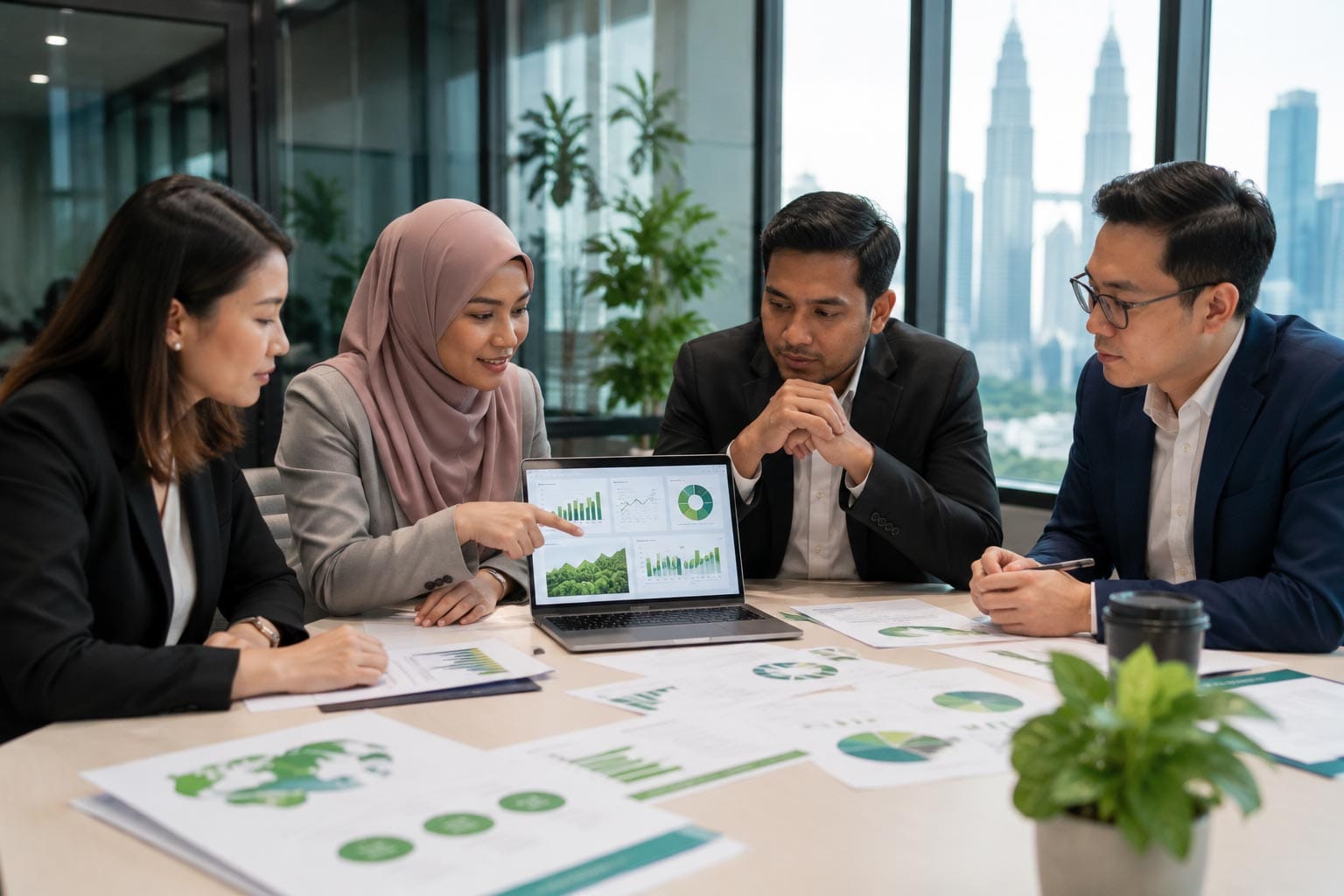
A thorough ESG readiness assessment Malaysia manufacturers undergo typically covers four core areas.
Governance review This assesses whether the company has an identified ESG owner, an ESG committee or working group, and clearly defined reporting responsibilities.
Data availability and quality check This involves reviewing the quality and accessibility of energy data, water usage, waste records, workforce data, and safety incident records.
Materiality assessment This identifies the ESG topics that matter most to the business and its stakeholders, such as emissions, labour practices, waste management, business ethics, and supply chain sustainability.
Gap analysis against reporting frameworks This benchmarks the company’s current position against the Bursa Malaysia Sustainability Reporting Guide, simplified SME ESG frameworks, and any customer-specific ESG requirements that apply.
7. What Happens If You Skip This Step?
Skipping the ESG readiness assessment Malaysia companies are expected to complete, and moving straight into reporting, tends to create problems that surface later, often at the worst possible time.
- Incomplete data collection — leading to poor-quality reports and disclosures that cannot be relied upon.
- Wrong KPI selection — resulting in wasted time and resources spent tracking metrics that are not actually relevant to the business.
- Delayed reporting timelines — caused by unstructured processes that create bottlenecks once deadlines approach.
- Weak audit and verification readiness — making future assurance or external verification significantly more difficult.
- Supplier and customer trust issues — as delayed or incomplete ESG responses can affect business relationships and competitiveness.
Not sure if your company is ESG-ready? A preliminary ESG readiness review can help identify your biggest gaps before formal reporting begins, giving you time to address them properly. You can also see our breakdown of common ESG reporting mistakes Johor companies must avoid for a closer look at how these issues tend to play out in practice.
8. ESG Consultant Malaysia: How a Consultant Can Help
Engaging an experienced ESG consultant Malaysia manufacturers can rely on is one of the fastest ways to accelerate the readiness assessment process and reduce the risk of costly missteps later on.
A trusted ESG consultant Malaysia can support companies with:
- Framework selection appropriate to the company’s size, sector, and reporting obligations
- ESG gap analysis across governance, data, and operations
- Data system planning to consolidate fragmented information
- Internal training to build ESG literacy across departments
- Reporting roadmap development to guide the transition from readiness to disclosure
This is why many companies choose to engage professional ESG consulting services before beginning formal ESG reporting, rather than attempting to navigate the process alone.
9. From Readiness to Reporting: What Comes Next?

Once an ESG readiness assessment Malaysia manufacturers can stand behind is complete, companies are in a much stronger position to move forward methodically. Our guide on how Johor manufacturers can start ESG reporting walks through this transition in more detail.
Step 1: Data system setup Build a proper ESG data collection system that consolidates information across departments and locations.
Step 2: Pilot ESG reporting Test internal reporting workflows on a smaller scale before committing to full disclosure, allowing issues to be identified and corrected early.
Step 3: Full ESG disclosure Publish official ESG disclosures based on a system that has already been tested and refined.
Step 4: Assurance and customer submission Prepare for customer audits, Bursa Malaysia requirements, and financing-related expectations with confidence, backed by a credible and well-documented process.
10. Frequently Asked Questions About ESG Consulting Services Malaysia
11. Conclusion
ESG reporting should not start with reporting. It should start with readiness.
A proper ESG readiness assessment Malaysia manufacturers complete first is the foundation that determines whether ESG reporting will ultimately be accurate, efficient, and credible. Companies that invest in this first step are far better positioned to meet the expectations of customers, regulators, and financiers — including the requirements set out under the Securities Commission Malaysia’s National Sustainability Reporting Framework — without the disruption of having to rebuild their reporting processes midway through.
Ready to Assess Your ESG Readiness?
If your company is preparing for ESG reporting, now is the right time to evaluate your readiness. Speak to our ESG consultant Malaysia team to explore practical ESG consulting services tailored for Malaysian manufacturers.
ESG Consulting Services Malaysia: ESG Readiness Assessment for Manufacturers
ESG Consulting Services Malaysia: ESG Readiness Assessment for Manufacturers
1. Do Malaysian Manufacturers Need an ESG Readiness Assessment Before ESG Reporting?
Quick answer: Engaging an ESG consultant Malaysia manufacturers trust is the most reliable way to run a proper ESG readiness assessment — the structured first step that should take place before formal ESG reporting begins.
This sequence matters because a readiness assessment allows a company to:
- Identify internal ESG gaps before they become reporting problems
- Assess whether existing data is accurate, complete, and accessible
- Align governance responsibilities across departments
- Avoid costly delays once reporting deadlines are in motion
Before engaging external ESG consulting services, companies should first understand how prepared they actually are for ESG reporting. Without this groundwork, even well-intentioned reporting efforts tend to stall.
2. Why Many Companies Get ESG Reporting Wrong
A common mistake among Malaysian manufacturers is treating ESG reporting as the starting point of their sustainability journey, rather than the outcome of one. In practice, many companies:
- Begin preparing reports before their internal processes are ready
- Collect ESG data without a clear structure or consistent methodology
- Respond reactively to customer ESG questionnaires instead of building a proactive system
In the rush to produce a report, several foundational issues are often overlooked, including unclear data ownership, the absence of a defined ESG governance structure, no agreed reporting framework, and incomplete or poorly defined KPIs.
The result is that reporting becomes the first step in the process, when it should logically be the final one — the output of a system that has already been built and tested.
3. What Is an ESG Readiness Assessment?
An ESG readiness assessment Malaysia manufacturers can rely on is a structured evaluation carried out before formal ESG reporting begins. It answers a simple but important question: is your company actually prepared to report, and report well?
The distinction is straightforward:
- Readiness means checking whether your company is prepared — internally, operationally, and structurally.
- Reporting means formally disclosing your ESG performance to stakeholders, regulators, customers, or investors.
The main purpose of a readiness assessment is to:
- Assess internal capability to manage ESG requirements
- Evaluate the state of existing data systems
- Identify governance gaps that could undermine reporting credibility
- Prepare the organisation for current and future reporting requirements
4. Which Malaysian Companies Need It Most?
While ESG readiness is relevant across industries, certain groups of Malaysian companies face more immediate pressure to complete an ESG readiness assessment Malaysia regulators and buyers increasingly expect.
Manufacturers exporting overseas This applies especially to manufacturers supplying customers in Singapore, Europe, and the United States, where ESG disclosure expectations are already well established and continue to tighten.
Suppliers receiving ESG questionnaires A growing number of buyers now request supplier ESG disclosures, sustainability questionnaires, and carbon-related data as part of their procurement and vendor evaluation processes. Our step-by-step supply chain ESG guide for Malaysian suppliers breaks down what these requests typically involve.
Bursa-linked companies This includes listed companies themselves, as well as the supply chain partners that support them and are increasingly drawn into their sustainability reporting requirements.
SMEs preparing for financing or tenders Banks and large buyers are increasingly requiring ESG-related disclosures as part of financing applications and tender submissions, even from smaller suppliers. For a closer look at what this involves, see our practical guide to ESG for SMEs in Malaysia.
5. Why This Matters More for Manufacturers in Malaysia
Manufacturers face a distinct set of ESG challenges that other sectors may not encounter to the same degree.
Complex supply chains Managing multiple suppliers across different tiers creates significant ESG visibility gaps, making it difficult to track performance and compliance beyond a company’s own operations.
Scattered operational data Key ESG data is often fragmented across different systems and departments, covering electricity usage, water consumption, waste records, employee welfare, and supplier compliance. Without consolidation, this data is difficult to use for reporting.
Cross-department coordination Successful ESG reporting typically requires input from Operations, HR, Procurement, Finance, and EHS (Environment, Health and Safety). Without clear coordination, ESG initiatives can easily become siloed.
These internal challenges are compounded by external pressure, including evolving Bursa Malaysia sustainability expectations under the National Sustainability Reporting Framework (NSRF), increasing customer ESG requirements, and the gradual adoption of simplified SME ESG frameworks across the supply chain. For manufacturers tracking how this rollout affects them specifically, our overview of the 2026 NSRF timeline and JS-SEZ strategy covers the practical implications in more detail.
6. What Does an ESG Readiness Assessment Include?
A thorough ESG readiness assessment Malaysia manufacturers undergo typically covers four core areas.
Governance review This assesses whether the company has an identified ESG owner, an ESG committee or working group, and clearly defined reporting responsibilities.
Data availability and quality check This involves reviewing the quality and accessibility of energy data, water usage, waste records, workforce data, and safety incident records.
Materiality assessment This identifies the ESG topics that matter most to the business and its stakeholders, such as emissions, labour practices, waste management, business ethics, and supply chain sustainability.
Gap analysis against reporting frameworks This benchmarks the company’s current position against the Bursa Malaysia Sustainability Reporting Guide, simplified SME ESG frameworks, and any customer-specific ESG requirements that apply.
7. What Happens If You Skip This Step?
Skipping the ESG readiness assessment Malaysia companies are expected to complete, and moving straight into reporting, tends to create problems that surface later, often at the worst possible time.
- Incomplete data collection — leading to poor-quality reports and disclosures that cannot be relied upon.
- Wrong KPI selection — resulting in wasted time and resources spent tracking metrics that are not actually relevant to the business.
- Delayed reporting timelines — caused by unstructured processes that create bottlenecks once deadlines approach.
- Weak audit and verification readiness — making future assurance or external verification significantly more difficult.
- Supplier and customer trust issues — as delayed or incomplete ESG responses can affect business relationships and competitiveness.
Not sure if your company is ESG-ready? A preliminary ESG readiness review can help identify your biggest gaps before formal reporting begins, giving you time to address them properly. You can also see our breakdown of common ESG reporting mistakes Johor companies must avoid for a closer look at how these issues tend to play out in practice.
8. ESG Consultant Malaysia: How a Consultant Can Help
Engaging an experienced ESG consultant Malaysia manufacturers can rely on is one of the fastest ways to accelerate the readiness assessment process and reduce the risk of costly missteps later on.
A trusted ESG consultant Malaysia can support companies with:
- Framework selection appropriate to the company’s size, sector, and reporting obligations
- ESG gap analysis across governance, data, and operations
- Data system planning to consolidate fragmented information
- Internal training to build ESG literacy across departments
- Reporting roadmap development to guide the transition from readiness to disclosure
This is why many companies choose to engage professional ESG consulting services before beginning formal ESG reporting, rather than attempting to navigate the process alone.
9. From Readiness to Reporting: What Comes Next?
Once an ESG readiness assessment Malaysia manufacturers can stand behind is complete, companies are in a much stronger position to move forward methodically. Our guide on how Johor manufacturers can start ESG reporting walks through this transition in more detail.
Step 1: Data system setup Build a proper ESG data collection system that consolidates information across departments and locations.
Step 2: Pilot ESG reporting Test internal reporting workflows on a smaller scale before committing to full disclosure, allowing issues to be identified and corrected early.
Step 3: Full ESG disclosure Publish official ESG disclosures based on a system that has already been tested and refined.
Step 4: Assurance and customer submission Prepare for customer audits, Bursa Malaysia requirements, and financing-related expectations with confidence, backed by a credible and well-documented process.
10. Frequently Asked Questions About ESG Consulting Services Malaysia
11. Conclusion
ESG reporting should not start with reporting. It should start with readiness.
A proper ESG readiness assessment Malaysia manufacturers complete first is the foundation that determines whether ESG reporting will ultimately be accurate, efficient, and credible. Companies that invest in this first step are far better positioned to meet the expectations of customers, regulators, and financiers — including the requirements set out under the Securities Commission Malaysia’s National Sustainability Reporting Framework — without the disruption of having to rebuild their reporting processes midway through.
Ready to Assess Your ESG Readiness?
If your company is preparing for ESG reporting, now is the right time to evaluate your readiness. Speak to our ESG consultant Malaysia team to explore practical ESG consulting services tailored for Malaysian manufacturers.
