

Navigating the FSSC 22000 V7 Transition in Malaysia: A Complete Guide for Food Exporters
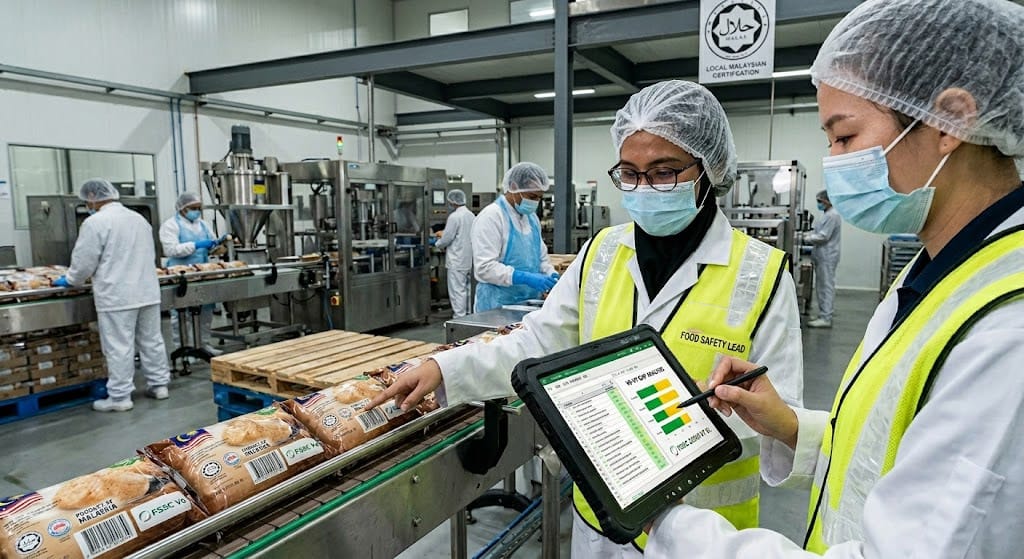
FSSC 22000 V7 Malaysia: 2026 Transition Guide for Food Manufacturers
Introduction: Why FSSC 22000 V7 Matters in 2026
The transition to FSSC 22000 V7 Malaysia introduces a major shift for Malaysian food manufacturers and exporters in 2026. Beyond traditional food safety controls, Version 7 now integrates sustainability, ESG governance, food waste monitoring, and ethical supply chain requirements into the certification framework.
For many exporters, FSSC 22000 V7 Malaysia is becoming a key requirement for maintaining international buyer confidence and protecting long-term export opportunities.
For years, food compliance focused mainly on hygiene management, hazard control, and audit preparation. While the previous Version 6 framework provided a strong foundation for food safety management systems (FSMS), global market expectations have evolved rapidly. International buyers now expect suppliers to demonstrate environmental responsibility, ethical sourcing practices, and transparent operational governance.
As export regulations and buyer requirements continue tightening across the European Union, North America, and Japan, Malaysian manufacturers must adapt quickly to maintain approved supplier status in global supply chains.
The FSSC 22000 Version 7 transition is no longer just a certification update — it is becoming an essential business requirement for long-term export competitiveness.
Which Malaysian Food Manufacturers Need FSSC 22000 V7 Transition?
The FSSC 22000 V7 transition is especially important for:
- Food exporters supplying international markets
- OEM and private label food manufacturers
- Beverage and dairy processing facilities
- Frozen food manufacturers
- Palm oil and agricultural food processors
- Packaging-related food supply chain companies
- Manufacturers supplying multinational retail brands
Companies involved in international food supply chains may face increased buyer scrutiny regarding ESG practices, packaging sustainability, and supplier transparency.
Companies that delay their FSSC 22000 V7 Malaysia transition may face increasing pressure from global procurement teams and certification bodies.
What’s New in FSSC 22000 Version 7?
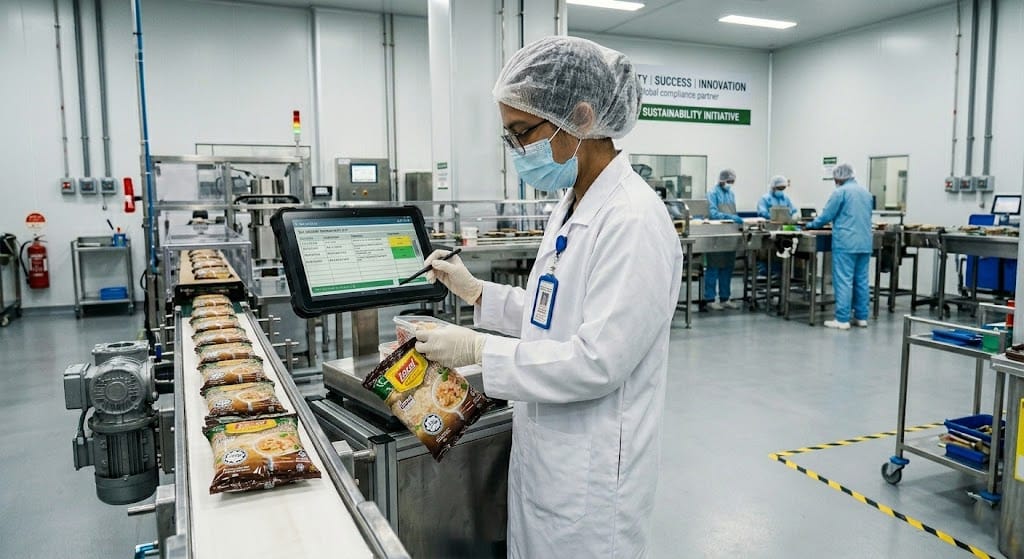
One of the biggest changes in FSSC 22000 V7 Malaysia is the integration of Environmental, Social, and Governance (ESG) principles into the food safety compliance structure.
Driven by updated expectations from the Global Food Safety Initiative (GFSI) and international procurement standards, sustainability is now becoming an auditable operational requirement rather than a voluntary CSR initiative.
1. Food Loss and Waste Management
Under Version 7, manufacturers must establish measurable food waste monitoring systems throughout production processes.
This includes:
- Tracking food loss data
- Setting reduction targets
- Maintaining audit-ready documentation
- Implementing continuous improvement strategies
Food waste management can no longer be treated as an informal operational issue.
2. Sustainable Packaging Requirements
The updated framework introduces stronger evaluation criteria for packaging sustainability.
Manufacturers are now expected to:
- Assess environmental impact of packaging materials
- Improve recyclability and biodegradability
- Reduce excessive packaging usage
- Support circular economy practices
This shift is particularly relevant for exporters supplying environmentally regulated markets.
3. Supply Chain Social Compliance
Version 7 also increases focus on ethical sourcing and labor governance.
Manufacturers must demonstrate that suppliers are monitored for:
- Labor rights compliance
- Ethical sourcing practices
- Human rights risks
- Supply chain transparency
If upstream suppliers are associated with exploitative labor practices or governance violations, certification risks may increase significantly.
Common FSSC 22000 V7 Transition Challenges in Malaysia
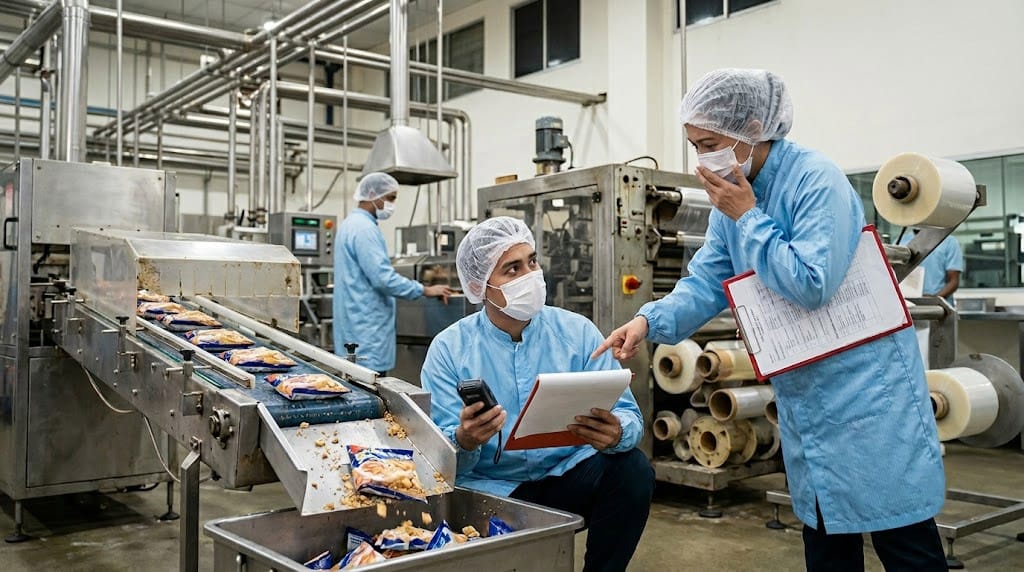
Many Malaysian manufacturers encounter operational difficulties during the transition process.
Common challenges include:
- Incomplete food waste tracking systems
- Limited ESG documentation procedures
- Weak supplier risk assessment processes
- Lack of internal ESG ownership
- Insufficient audit evidence preparation
- Packaging sustainability data gaps
Many businesses underestimate the operational preparation required for FSSC 22000 V7 Malaysia compliance.
Without early preparation, these issues may delay certification upgrades or increase audit non-conformities.
FSSC 22000 V7 Transition Roadmap for Malaysian Factories
A successful transition requires structured planning and cross-department collaboration. Malaysian manufacturers should adopt a phased implementation approach to reduce disruption and improve audit readiness.
Phase 1: Gap Analysis & Leadership Alignment
Timeline: Months 1–2
Key Actions
- Establish a dedicated V7 steering committee
- Involve QA, Procurement, HR, and ESG teams
- Review existing Version 6 systems
- Identify compliance gaps and operational risks
Primary Goal
Create a practical transition roadmap and prioritize high-risk compliance areas.
Phase 2: Process Integration & System Restructuring
Timeline: Months 3–5
Key Actions
- Update SOPs and operational workflows
- Implement food waste data logging systems
- Introduce supplier ESG assessment procedures
- Improve packaging sustainability tracking
Primary Goal
Embed ESG and sustainability practices directly into daily operations.
Phase 3: Internal Auditing & Compliance Stress Testing
Timeline: Months 6–7
Key Actions
- Conduct internal audits based on V7 requirements
- Test audit evidence accessibility
- Review waste reduction documentation
- Validate supplier compliance records
Primary Goal
Identify weaknesses before official certification assessment.
Phase 4: Official Transition Audit & Continuous Improvement
Timeline: Month 8 onwards
Key Actions
- Undergo the formal FSSC 22000 V7 audit
- Address non-conformities promptly
- Maintain ongoing ESG monitoring systems
- Continuously improve operational sustainability
Primary Goal
Secure certification approval and strengthen long-term export competitiveness.
Why Early Transition Planning Matters
Manufacturers that begin preparation early may gain several advantages, including:
- Stronger buyer confidence
- Better export market positioning
- Reduced audit disruption
- Improved operational efficiency
- Enhanced ESG credibility
- Greater alignment with international procurement expectations
As global food supply chains become increasingly sustainability-driven, proactive compliance planning is becoming a major competitive advantage.
Conclusion: Prepare Your Business for the Future of Food Compliance

The FSSC 22000 V7 update represents a major transformation for the Malaysian food manufacturing sector. Food safety alone is no longer enough — global markets increasingly demand sustainability, ethical governance, and transparent operational accountability.
Manufacturers that adapt early will be better positioned to protect export opportunities, strengthen buyer relationships, and maintain long-term market relevance.
Early preparation for FSSC 22000 V7 Malaysia can help manufacturers reduce audit risks and improve long-term export readiness.
Learn more about our FSSC 22000 consultant services and transition support for Malaysian food manufacturers.
You may also refer to the official FSSC Official Website for the latest Version 7 framework updates and certification requirements.
Contact Clarity Success Innovation today to schedule your FSSC 22000 V7 readiness assessment and build a practical transition strategy tailored to your business operations.


Navigating the FSSC 22000 V7 Transition in Malaysia: A Complete Guide for Food Exporters
FSSC 22000 V7 Malaysia: 2026 Transition Guide for Food Manufacturers
Introduction: Why FSSC 22000 V7 Matters in 2026
The transition to FSSC 22000 V7 Malaysia introduces a major shift for Malaysian food manufacturers and exporters in 2026. Beyond traditional food safety controls, Version 7 now integrates sustainability, ESG governance, food waste monitoring, and ethical supply chain requirements into the certification framework.
For many exporters, FSSC 22000 V7 Malaysia is becoming a key requirement for maintaining international buyer confidence and protecting long-term export opportunities.
For years, food compliance focused mainly on hygiene management, hazard control, and audit preparation. While the previous Version 6 framework provided a strong foundation for food safety management systems (FSMS), global market expectations have evolved rapidly. International buyers now expect suppliers to demonstrate environmental responsibility, ethical sourcing practices, and transparent operational governance.
As export regulations and buyer requirements continue tightening across the European Union, North America, and Japan, Malaysian manufacturers must adapt quickly to maintain approved supplier status in global supply chains.
The FSSC 22000 Version 7 transition is no longer just a certification update — it is becoming an essential business requirement for long-term export competitiveness.
Which Malaysian Food Manufacturers Need FSSC 22000 V7 Transition?
The FSSC 22000 V7 transition is especially important for:
- Food exporters supplying international markets
- OEM and private label food manufacturers
- Beverage and dairy processing facilities
- Frozen food manufacturers
- Palm oil and agricultural food processors
- Packaging-related food supply chain companies
- Manufacturers supplying multinational retail brands
Companies involved in international food supply chains may face increased buyer scrutiny regarding ESG practices, packaging sustainability, and supplier transparency.
Companies that delay their FSSC 22000 V7 Malaysia transition may face increasing pressure from global procurement teams and certification bodies.
What’s New in FSSC 22000 Version 7?
One of the biggest changes in FSSC 22000 V7 Malaysia is the integration of Environmental, Social, and Governance (ESG) principles into the food safety compliance structure.
Driven by updated expectations from the Global Food Safety Initiative (GFSI) and international procurement standards, sustainability is now becoming an auditable operational requirement rather than a voluntary CSR initiative.
1. Food Loss and Waste Management
Under Version 7, manufacturers must establish measurable food waste monitoring systems throughout production processes.
This includes:
- Tracking food loss data
- Setting reduction targets
- Maintaining audit-ready documentation
- Implementing continuous improvement strategies
Food waste management can no longer be treated as an informal operational issue.
2. Sustainable Packaging Requirements
The updated framework introduces stronger evaluation criteria for packaging sustainability.
Manufacturers are now expected to:
- Assess environmental impact of packaging materials
- Improve recyclability and biodegradability
- Reduce excessive packaging usage
- Support circular economy practices
This shift is particularly relevant for exporters supplying environmentally regulated markets.
3. Supply Chain Social Compliance
Version 7 also increases focus on ethical sourcing and labor governance.
Manufacturers must demonstrate that suppliers are monitored for:
- Labor rights compliance
- Ethical sourcing practices
- Human rights risks
- Supply chain transparency
If upstream suppliers are associated with exploitative labor practices or governance violations, certification risks may increase significantly.
Common FSSC 22000 V7 Transition Challenges in Malaysia
Many Malaysian manufacturers encounter operational difficulties during the transition process.
Common challenges include:
- Incomplete food waste tracking systems
- Limited ESG documentation procedures
- Weak supplier risk assessment processes
- Lack of internal ESG ownership
- Insufficient audit evidence preparation
- Packaging sustainability data gaps
Many businesses underestimate the operational preparation required for FSSC 22000 V7 Malaysia compliance.
Without early preparation, these issues may delay certification upgrades or increase audit non-conformities.
FSSC 22000 V7 Transition Roadmap for Malaysian Factories
A successful transition requires structured planning and cross-department collaboration. Malaysian manufacturers should adopt a phased implementation approach to reduce disruption and improve audit readiness.
Phase 1: Gap Analysis & Leadership Alignment
Timeline: Months 1–2
Key Actions
- Establish a dedicated V7 steering committee
- Involve QA, Procurement, HR, and ESG teams
- Review existing Version 6 systems
- Identify compliance gaps and operational risks
Primary Goal
Create a practical transition roadmap and prioritize high-risk compliance areas.
Phase 2: Process Integration & System Restructuring
Timeline: Months 3–5
Key Actions
- Update SOPs and operational workflows
- Implement food waste data logging systems
- Introduce supplier ESG assessment procedures
- Improve packaging sustainability tracking
Primary Goal
Embed ESG and sustainability practices directly into daily operations.
Phase 3: Internal Auditing & Compliance Stress Testing
Timeline: Months 6–7
Key Actions
- Conduct internal audits based on V7 requirements
- Test audit evidence accessibility
- Review waste reduction documentation
- Validate supplier compliance records
Primary Goal
Identify weaknesses before official certification assessment.
Phase 4: Official Transition Audit & Continuous Improvement
Timeline: Month 8 onwards
Key Actions
- Undergo the formal FSSC 22000 V7 audit
- Address non-conformities promptly
- Maintain ongoing ESG monitoring systems
- Continuously improve operational sustainability
Primary Goal
Secure certification approval and strengthen long-term export competitiveness.
Why Early Transition Planning Matters
Manufacturers that begin preparation early may gain several advantages, including:
- Stronger buyer confidence
- Better export market positioning
- Reduced audit disruption
- Improved operational efficiency
- Enhanced ESG credibility
- Greater alignment with international procurement expectations
As global food supply chains become increasingly sustainability-driven, proactive compliance planning is becoming a major competitive advantage.
Conclusion: Prepare Your Business for the Future of Food Compliance
The FSSC 22000 V7 update represents a major transformation for the Malaysian food manufacturing sector. Food safety alone is no longer enough — global markets increasingly demand sustainability, ethical governance, and transparent operational accountability.
Manufacturers that adapt early will be better positioned to protect export opportunities, strengthen buyer relationships, and maintain long-term market relevance.
Early preparation for FSSC 22000 V7 Malaysia can help manufacturers reduce audit risks and improve long-term export readiness.
Learn more about our FSSC 22000 consultant services and transition support for Malaysian food manufacturers.
You may also refer to the official FSSC Official Website for the latest Version 7 framework updates and certification requirements.
Contact Clarity Success Innovation today to schedule your FSSC 22000 V7 readiness assessment and build a practical transition strategy tailored to your business operations.
