
FSSC 22000 Version 7: What Organisations Need to Prepare

Preparing for FSSC 22000 Version 7 Through Structured Training
As food safety standards continue to evolve, many organisations are paying closer attention to FSSC 22000 Version 7 and what it means for their certification journey. With updated requirements, revised prerequisite programme structures and closer alignment with global benchmarks, preparation is no longer limited to document updates alone. For many organisations, the starting point is effective FSSC 22000 training.
Rather than reacting only when audits approach, organisations that invest in training earlier are better positioned to understand upcoming changes, align internal teams and reduce implementation risks.

Why FSSC 22000 Training Matters More with Version 7
The development of FSSC 22000 Version 7 reflects broader changes across the global food industry. Updates such as the adoption of the ISO 22002 series:2025, alignment with GFSI Benchmarking Requirements 2024 and increased attention to sustainability considerations have expanded both the scope and expectations of the scheme.
As requirements become more structured and detailed, relying solely on past certification experience may no longer be sufficient. FSSC 22000 training plays a key role in helping organisations interpret updated requirements correctly, avoid misalignment across departments and prepare more confidently for future audits.
Key Changes Introduced
FSSC 22000 Version 7 introduces several important updates that directly affect how food safety systems are implemented and maintained.
One of the most significant changes is the transition from ISO/TS 22002 documents to the updated ISO 22002 series:2025, including the introduction of ISO 22002-100 as a common core standard. This structure clarifies how prerequisite programmes apply across different food supply chain sectors, while maintaining sector-specific requirements.
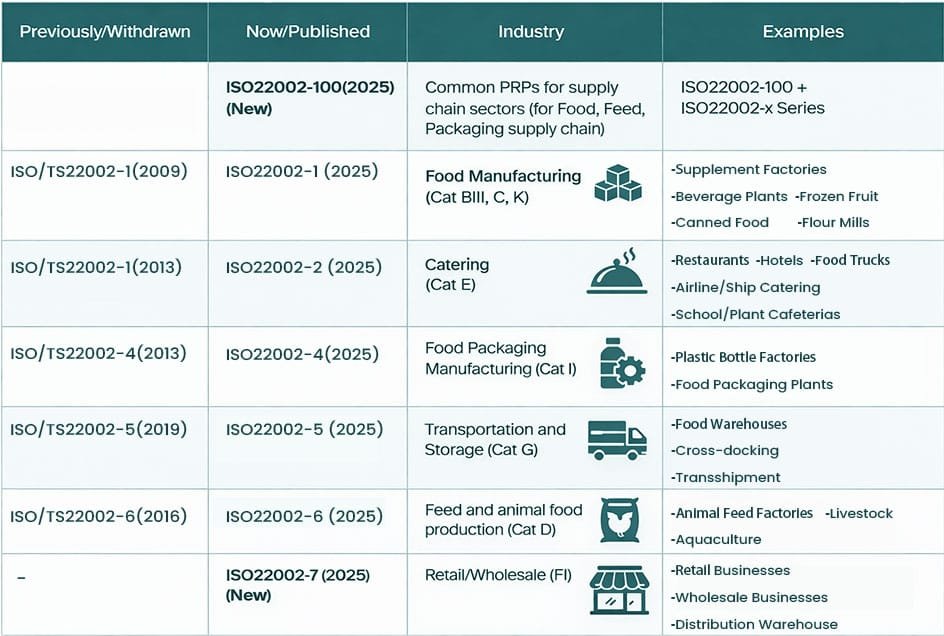
In addition, closer alignment with GFSI benchmarking requirements and stronger emphasis on sustainability-related topics mean organisations are expected not only to comply, but also to demonstrate consistent understanding and application across operations.
These changes further reinforce the need for targeted FSSC 22000 training, especially for teams responsible for system management, internal audits and operational control.
Timeline and Transition Considerations
While the official publication date of FSSC 22000 Version 7 is expected around late Q1 or early Q2 of 2026, organisations will be provided with a 12-month transition period once the standard is released. To ensure your food facility doesn’t face unnecessary audit pressure, make sure to review the specific local timeline and readiness checklist highlighted in our FSSC 22000 V7 Malaysia Transition Guide.
This transition window allows time for system review, documentation updates and internal alignment. However, organisations that delay preparation often experience unnecessary pressure closer to audit deadlines. Starting FSSC 22000 training early enables teams to use the transition period more effectively, focusing on refinement rather than last-minute corrective actions.
Who Needs to Understand Version 7 Preparation
FSSC 22000 training related to Version 7 is not limited to food safety managers alone. It is particularly relevant for:
- Food safety and quality management teams
- Internal auditors and audit coordinators
- Operations and production supervisors
- Management personnel responsible for compliance and certification decisions
When Additional Advisory Support May Be Needed
As FSSC 22000 Version 7 introduces updated PRP structures and new ISO 22002:2025 requirements, some organisations may find that internal interpretation alone is not always sufficient. Changes in structure, terminology and sector-specific application can create uncertainty during implementation.
In such cases, working with an experienced FSSC 22000 consultant can help clarify expectations, align systems with scheme requirements and reduce transition risks, particularly during planning and early implementation stages.
Preparing for FSSC 22000 Version 7 with the Right Training Approach
As organisations prepare for FSSC 22000 training and the transition to Version 7, early planning and the right level of support can make the process more efficient and less disruptive. Structured training helps teams understand what has changed, why it matters and how requirements should be applied in practice.
If your organisation is considering its next steps for FSSC 22000 training or transition planning, you may contact the Clarity team to discuss suitable training or consulting support based on your operational needs.

FSSC 22000 Version 7: What Organisations Need to Prepare
Preparing for FSSC 22000 Version 7 Through Structured Training
As food safety standards continue to evolve, many organisations are paying closer attention to FSSC 22000 Version 7 and what it means for their certification journey. With updated requirements, revised prerequisite programme structures and closer alignment with global benchmarks, preparation is no longer limited to document updates alone. For many organisations, the starting point is effective FSSC 22000 training.
Rather than reacting only when audits approach, organisations that invest in training earlier are better positioned to understand upcoming changes, align internal teams and reduce implementation risks.
Why FSSC 22000 Training Matters More with Version 7
The development of FSSC 22000 Version 7 reflects broader changes across the global food industry. Updates such as the adoption of the ISO 22002 series:2025, alignment with GFSI Benchmarking Requirements 2024 and increased attention to sustainability considerations have expanded both the scope and expectations of the scheme.
As requirements become more structured and detailed, relying solely on past certification experience may no longer be sufficient. FSSC 22000 training plays a key role in helping organisations interpret updated requirements correctly, avoid misalignment across departments and prepare more confidently for future audits.
Key Changes Introduced
FSSC 22000 Version 7 introduces several important updates that directly affect how food safety systems are implemented and maintained.
One of the most significant changes is the transition from ISO/TS 22002 documents to the updated ISO 22002 series:2025, including the introduction of ISO 22002-100 as a common core standard. This structure clarifies how prerequisite programmes apply across different food supply chain sectors, while maintaining sector-specific requirements.
In addition, closer alignment with GFSI benchmarking requirements and stronger emphasis on sustainability-related topics mean organisations are expected not only to comply, but also to demonstrate consistent understanding and application across operations.
These changes further reinforce the need for targeted FSSC 22000 training, especially for teams responsible for system management, internal audits and operational control.
Timeline and Transition Considerations
While the official publication date of FSSC 22000 Version 7 is expected around late Q1 or early Q2 of 2026, organisations will be provided with a 12-month transition period once the standard is released. To ensure your food facility doesn’t face unnecessary audit pressure, make sure to review the specific local timeline and readiness checklist highlighted in our FSSC 22000 V7 Malaysia Transition Guide.
This transition window allows time for system review, documentation updates and internal alignment. However, organisations that delay preparation often experience unnecessary pressure closer to audit deadlines. Starting FSSC 22000 training early enables teams to use the transition period more effectively, focusing on refinement rather than last-minute corrective actions.
Who Needs to Understand Version 7 Preparation
FSSC 22000 training related to Version 7 is not limited to food safety managers alone. It is particularly relevant for:
- Food safety and quality management teams
- Internal auditors and audit coordinators
- Operations and production supervisors
- Management personnel responsible for compliance and certification decisions
When Additional Advisory Support May Be Needed
As FSSC 22000 Version 7 introduces updated PRP structures and new ISO 22002:2025 requirements, some organisations may find that internal interpretation alone is not always sufficient. Changes in structure, terminology and sector-specific application can create uncertainty during implementation.
In such cases, working with an experienced FSSC 22000 consultant can help clarify expectations, align systems with scheme requirements and reduce transition risks, particularly during planning and early implementation stages.
Preparing for FSSC 22000 Version 7 with the Right Training Approach
As organisations prepare for FSSC 22000 training and the transition to Version 7, early planning and the right level of support can make the process more efficient and less disruptive. Structured training helps teams understand what has changed, why it matters and how requirements should be applied in practice.
If your organisation is considering its next steps for FSSC 22000 training or transition planning, you may contact the Clarity team to discuss suitable training or consulting support based on your operational needs.
